Best Practices for Joining Basketball Club Teams San Diego
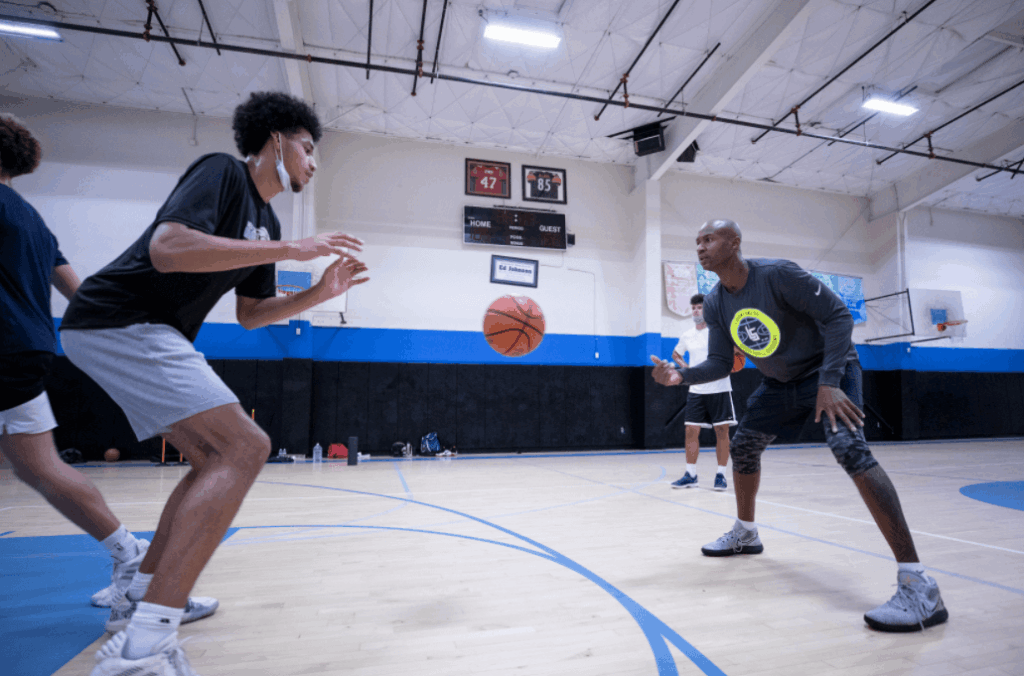
Parents and players often treat club basketball like a simple next step. Find a team, attend a tryout, pay the fees, and get started. In practice, the choice has more weight than that, especially in a place like San Diego, where the basketball landscape is broad, competitive, and uneven in ways that are not always obvious at first glance.
Some programs are excellent at skill development but weak on communication. Some offer strong exposure but not enough teaching. Others have a great local reputation for younger age groups, then struggle once players hit the high school years and expectations rise. The families who tend to make the best decisions are not necessarily the ones who know the most basketball. They are usually the ones who slow down, ask sharper questions, and judge the fit with honesty.
If you are evaluating Basketball Club Teams San Diego, the goal is not to find the most hyped option. The goal is to find the right environment for the player in front of you, right now, with a clear view of where that player might realistically be headed over the next one to three years.
Start with the player, not the logo
One of the most common mistakes is picking a club based on brand recognition alone. A known name can matter, but it should never be the first filter. I have seen players join programs with polished social media, matching travel gear, and packed tournament schedules, only to spend entire weekends sitting at the end of the bench. I have also seen players thrive in smaller gyms with less fanfare because the coach taught details, gave honest feedback, and found minutes that matched the athlete’s readiness.
A ten-year-old beginner, a seventh grader trying to make the jump from rec ball, and a varsity-caliber sophomore all need different things. That sounds obvious, but families often skip this step because it is easier to compare teams than it is to assess the player realistically.
Ask simple questions first. Is the player still building basic ball-handling and footwork, or already competing at a high level? Does the player need confidence and repetition, or stronger competition and accountability? Is the main priority skill growth, game experience, exposure, or all three in a healthy order? Those answers shape everything else.
For younger players, the best club is usually the one that teaches well, organizes consistently, and puts athletes in meaningful game situations. For older players, especially in high school, development still matters, but roster role, coaching credibility, and competition level carry more weight. A player who wants college opportunities needs the right games, the right film, and a coach who will tell the truth about where that player stands.
The San Diego club scene has real range
San Diego offers a mix of established organizations, neighborhood-based clubs, training-first programs, and teams that are highly competitive in only certain age groups. That range can be a strength, but it can also confuse families who assume all “club” experiences are more or less the same.
They are not.
One team may practice twice a week and play mostly local weekend events. Another may travel regularly to Orange County, Los Angeles, Arizona, or Las Vegas. One coach may prioritize half-court execution, decision-making, and player accountability. Another may lean heavily on athleticism, pressing, and quick substitutions. A roster labeled elite may truly be elite, or it may simply be the top roster within a small organization.
This is why broad claims like “they’re one of the best Basketball Club Teams San Diego has” should be treated carefully. Best for what? Best for eighth-grade guards? Best for exposure? Best for beginners who need a structured introduction to travel ball? Best for girls, boys, or both? Best this season, or two years ago?
The details matter more than the marketing.
What a healthy program looks like in real life
Strong clubs usually reveal themselves through ordinary habits, not slogans. Practices start on time. Coaches know players’ names and tendencies. There is a visible plan, even if the gym space is modest. Feedback is specific. Communication about tournaments, fees, uniforms, and expectations is clear enough that parents do not feel like they are decoding a mystery every week.
The best coaches also understand the tension between development and winning. They want both, but they know when to lean into teaching. In a strong setting, a bad turnover becomes a teaching moment, not a public shaming. At the same time, a player who misses rotations, jogs back on defense, or coasts through drills is held accountable. That balance is harder to find than many people think.
Look closely at how the staff handles role definition. Some clubs promise every family what they want to hear. That rarely ends well. Honest coaches explain where a player stands, what must improve, and what kind of minutes are likely if things do not change. Families may not love every answer, but clarity prevents months of frustration.
A healthy program also has age-appropriate expectations. Elementary and middle school players should not feel like they are in a year-round pressure cooker. Serious training is good. Constant stress is not. Older players can handle more demanding schedules, but even then, the strongest programs understand school, family, and recovery.
Tryouts tell you something, but not enough
Tryouts matter, though they are only a partial picture. They reveal how an organization evaluates talent, how crowded the age group is, and how coaches interact when they are watching many players at once. What they do not always reveal is what everyday life on the team feels like after the roster is set.
I tell families to treat the tryout as the opening chapter, not the whole book.
During tryouts, watch for pace and structure. Are players standing around for long stretches? Do drills test real game skills like spacing, decision-making, closeouts, and transition habits, or are they mostly cosmetic? Does the coach teach during the session, or only observe? A coach who can both evaluate and instruct is often a better long-term bet than one who simply sorts athletes by who looks the most polished in the moment.
You should also pay attention to how your player responds physically and emotionally. Some athletes leave a tryout energized, challenged, and excited. Others look overwhelmed in a way that suggests the fit may be too aggressive right now. That does not mean they should avoid competition. It means families need to know whether the environment is stretching the player productively or burying them.
Whenever possible, watch an actual team practice or game before committing. A polished tryout can hide a disorganized season. A less flashy tryout can belong to a coach who is excellent once regular training begins.
Ask better questions before you commit
Families often ask about tournament schedules and uniform packages before they ask about development philosophy. Those practical questions matter, especially because club basketball is expensive, but they should not dominate the conversation.
The most useful questions are the ones that reveal how the team actually functions.
- How many players do you expect on the roster, and how do minutes typically shake out?
- What does a normal practice week look like during the season?
- How do you communicate with families about schedule changes, expectations, and concerns?
- What skills or habits does this player most need to improve to earn a larger role?
- How much travel should we realistically expect this season?
Each of those questions opens the door to a more revealing answer than “Are you a good team?” If a coach answers directly and without defensiveness, that is a positive sign. If every response sounds vague, inflated, or evasive, pay attention.
A phrase I listen for is some version of “it depends on the player, but here is usually how we handle it.” That kind of answer suggests experience and flexibility. Absolute promises usually suggest salesmanship.
Understand the money, because the money shapes the experience
Club basketball in San Diego can range from relatively manageable to genuinely expensive, depending on the level, travel footprint, and extra training built into the package. Tuition is only the obvious part. Families also need to think about uniforms, tournament admissions, hotel costs, fuel, flights in some cases, meals on the road, and private training that often becomes an unofficial expectation.
That does not mean the most expensive team is the best. In fact, I have seen families overpay for status and underinvest in targeted development. A player might get more from one strong team practice, one good small-group skills session, and one weekend of meaningful games than from a bloated schedule full of travel and low-quality minutes.
Ask for the full season estimate, not just the base fee. Ask what is included and what is extra. Some clubs package everything cleanly. Others separate nearly every expense, which can make the cost feel much larger by midseason. Neither model is automatically wrong, but transparency matters.
It is also fair to ask about refund policies, missed tournaments, injury situations, and what happens if coaching assignments change. Families are sometimes shy about money conversations because they do not want to appear difficult. In reality, clear financial communication is one of the marks of a professional organization.
Playing time is the issue everyone feels and few discuss well
No topic creates more frustration in club basketball than playing time. Parents can tolerate early mornings, long drives, and plenty of expense if they believe the role is fair and the path forward is honest. What breaks trust is confusion.
For younger players, especially those in developmental stages, benching kids for long stretches every weekend usually works against growth. For older, more competitive teams, minutes may be tighter and role-based, which can be appropriate. The key is whether the standards are visible and consistent.
A strong coach does not need to equalize every minute, but that coach should be able to explain what earns trust. Defensive effort, decision-making, communication, pace, practice habits, conditioning, and positional understanding all make sense as criteria. Random substitutions based on emotion do not.
Families should be careful here too. Some players say “I never get a chance,” when the harder truth is that they are not rebounding, not defending, and not making quick reads. Others genuinely are being overlooked because a coach favors familiar players. Both realities exist. The best approach is to seek honest feedback, then compare it to what shows up on film and in games.
One practical step helps more than almost anything else: ask the coach for two or three specific development targets tied to role expansion. Vague frustration becomes manageable when the player can work on concrete things like stronger weak-hand drives, cleaner closeouts, or better off-ball spacing.
Development is not just skill work
When families talk about development, they often mean ball-handling drills and shooting reps. Those matter, but real development is broader. It includes body language after mistakes, defensive recognition, decision speed, communication, and the ability to absorb coaching without shutting down.
The players who improve the most in club settings are usually not just the ones with the flashiest training routines. They are the ones who become more playable. Coaches trust players who sprint back, rotate correctly, make the next pass, and compete possession after possession.
This is especially important in San Diego, where athletes may move between school ball, club ball, and private training environments that emphasize different things. A player can look sharp in workouts and still struggle in games because the game demands processing, not just technique. Good Basketball Club Teams San Diego families look for coaches who teach transferable habits, not just isolated moves.
I remember watching a middle school guard who was clearly less polished than two teammates during warmups. In games, though, she defended without fouling, advanced the ball under pressure, and made simple reads on time. By the third tournament weekend, she was closing games. Nothing about that was accidental. The coach valued dependable basketball, and the player understood what winning possessions looked like.
The coach-player-parent relationship needs boundaries
Club basketball works https://www.google.com/maps?cid=10211666664564973643 best when everyone knows their lane. Coaches coach. Players play and learn. Parents support, observe, and communicate respectfully when needed. Problems start when any of those roles spill over into the others.
A parent who constantly instructs from the sideline can make a player tense and distract a coach. A coach who communicates only through criticism can lose a locker room. A player who uses parents as a shield from feedback will stall out sooner or later.
Before joining a team, try to understand the club’s communication culture. Some programs prefer concerns to go through a team manager first. Some want players to speak directly to coaches before parents step in. That is not a bad standard, especially for older athletes. It teaches maturity. But it should be explained clearly.
The strongest parent behavior is often the least dramatic. Get your player to the gym on time. Keep postgame conversations calm. Ask what they noticed, not just how many points they scored. If there is a real issue, address it privately and specifically, not in parking lot circles or group texts.
Travel can help, but only if the games justify it
There is a tendency to equate travel with opportunity. Sometimes that is true. High-level tournaments can expose players to better competition, force adaptation, and create visibility for older athletes. Sometimes travel is just travel.
A weekend away only helps if the player is facing meaningful competition, getting usable minutes, and returning with something learned. Otherwise, families are spending time and money for little return beyond experience for its own sake.
For younger players, a mostly local schedule is often enough, particularly in a talent-rich area. For stronger middle school and high school players, selective travel can be valuable, especially when it places them against size, speed, and structure they do not always see locally. The word selective matters. A full calendar is not automatically a smart calendar.
When you ask about tournament plans, ask where the team expects to be placed competitively. Top bracket, middle bracket, or developmental division tells you more than the event name alone.
Warning signs that deserve attention
Some red flags show up immediately. Others only appear after a few conversations or one observed practice. Either way, they are worth respecting.
- Guaranteed promises about scholarships, exposure, or playing time
- Constant roster churn with little explanation
- Disorganized schedules and unclear fees
- Coaches who talk more about opponents and referees than teaching
- A culture where weaker players are ignored rather than developed
One or two issues do not automatically make a program bad. Youth sports are messy, and even strong clubs have rough stretches. But when several of these signs cluster together, families should be cautious.
Younger players need a different lens than high school athletes
This point cannot be overstated. What is right for a fourth grader is rarely what is right for an eleventh grader.
For elementary and younger middle school players, the best environment is usually one that builds joy, confidence, fundamentals, and competitive resilience. Kids should learn spacing, defensive stance, passing angles, finishing footwork, and how to recover after mistakes. They also need enough touches and enough live reps to make those lessons stick. At those ages, a team with sound teaching and moderate competition can outperform a more prestigious option where the player barely sees the floor.
By high school, the picture shifts. Now the questions become sharper. Can this team help the player prepare for varsity impact? Will the competition expose current weaknesses? Is there enough role clarity to produce meaningful film? Does the coach have the honesty and knowledge to guide a player who wants to pursue college basketball, even if that path is modest rather than glamorous?
Families often struggle because they use the same criteria year after year. They should not. The right choice evolves as the player does.
When a smaller role on a stronger team makes sense, and when it does not
This is one of the harder judgments. Sometimes a smaller role on a stronger roster is exactly what a player needs. Practicing daily against better athletes can sharpen habits fast. The player may learn pace, defensive urgency, and decision-making that a weaker team cannot force.
But there is a threshold. If the role is so limited that the athlete never gets to apply those lessons in games, growth can flatten. Confidence can too. I have seen players spend a season “playing up” in status while actually falling behind because they lost live reps, stopped making mistakes at speed, and became tentative.
A useful rule of thumb is this: if the player is challenged in practice and still gets enough game action to test improvement, the stronger team may be a good fit. If the player is mostly watching, the badge on the warmup does not compensate.
This is where blunt self-assessment helps. Some athletes are energized by chasing minutes in a difficult environment. Others need a larger role to expand. Neither profile is wrong. The mistake is pretending they are the same.
Making the final decision with clear eyes
At the end of the process, most families are balancing three things at once: development, opportunity, and day-to-day experience. The best choice usually sits at the intersection of all three, not at the extreme edge of any one.
If two clubs seem close, lean toward the staff that communicates better and teaches more clearly. Talent matters, but trust matters too. Over the course of a season, strong communication prevents a remarkable amount of avoidable stress.
Also remember that no club decision is permanent. Players grow. Needs change. Coaches move. Teams split and merge. A good fit for this season is still worth choosing, even if it may not be the best fit two years from now.
The families who navigate Basketball Club Teams San Diego well tend to keep perspective. They value competition but do not worship labels. They ask practical questions. They watch how adults behave. They pay attention to whether the player is actually improving in ways that transfer to real games.
That mindset leads to better decisions than hype ever will. And in club basketball, better decisions compound. One sound season, with the right coach, the right role, and the right level of challenge, can change a player’s path far more than the flashiest promise on the market.
Lamont Smith Basketball Academy
888 Clairemont Mesa Blvd Suite T-2, San Diego, CA 92123
(619) 639-8778
FAQ About Basketball Club Teams San Diego
How can a player join an LSBA club team?
Players are evaluated during practices so the coaching staff can recommend an appropriate team and development level. Families should contact the academy to confirm current openings and evaluation details.
Are club teams available for newer basketball players?
Yes. LSBA describes multiple levels, including a developmental option for newer players as well as more competitive teams for athletes with prior club experience.
What do LSBA club team practices emphasize?
Practices emphasize basketball fundamentals, team defense, structure, communication, and player development. The specific focus may vary according to the team and experience level.
Do all LSBA teams travel?
Travel expectations vary by level. Some teams focus on local competition, while advanced teams may participate in tournaments elsewhere in Southern California or beyond. Families should confirm the current schedule before enrolling.